

Pencil Control Activity Sheets: A Reusable Alternative That Lasts
What the research actually shows about how pencil control develops — the four grip stages, why hundreds of repetitions matter, and the reusable format that scales with your child.
“Most pencil control sheets work once. A reusable system works for years — and that’s the point. Children need hundreds of repetitions to refine grip.”

A reusable card outlasts a stack of printouts by a thousand to one.

4 stages
Of pencil grip development from palmar grasp to dynamic tripod
Schneck & Henderson, 1990

18 months
Average duration of grip refinement across the four stages
Developmental grip norms

Hundreds
Of repetitions needed to develop muscle memory for refined pencil control
Fine motor research
The 4 Stages of Pencil Grip Development

Age 2-3
Palmar grasp
Whole-hand wrap. Motion comes from the shoulder. Match this stage with chunky markers and big surfaces.

Age 3-4
Digital pronate
Fingers grip from above, wrist turned down. Lines feel more deliberate, motion still mostly from the elbow.

Age 4-5
Static tripod
Three fingers hold the pencil but move together. Most letter formation begins to feel possible here.

Age 5-6
Dynamic tripod
Fingers move independently of the hand. Refined pencil control is officially in place.
The 3-Step Framework Therapists Use

Hand strength first
Before any pencil work, build hand and finger strength. Playdough, tongs, squeeze toys, finger games. A strong hand controls a pencil; a weak hand fights one.

Wide trace lines
Start with chunky tools, bold lines, low precision. The goal is rhythm and confidence with the motion, not accuracy with the shape. Big strokes match where the hand actually is.

Refine to letters
Once grip refines, transition from strokes to letter shapes. Skinnier tools invite a tripod grip; familiar strokes assemble into letters with less effort and more success.
Built For This
Reusable Practice Cards, Built for Real Repetitions
Pencil control is purely a muscle-memory task. A child needs hundreds of repetitions to refine grip, and a stack of printable activity sheets covers a fraction of that — then ends in the recycling bin.
The Trace Lab is a set of dry-erase pencil control cards paired with a 49-page progression guide. The cards begin with wide strokes, move through skinnier lines, and finish at letter shapes. The guide tells parents which card to use at each grip stage.
Every variant ships with: foundation stroke cards, 26 dry-erase letter cards, a chunky dry-erase marker, a wipeable storage pouch, and the free Trace Lab Guide ($49 value) with developmental plans for each grip stage.

The Trace Lab
Reusable pencil control and handwriting system
30-day satisfaction
Three Myths About Pencil Control
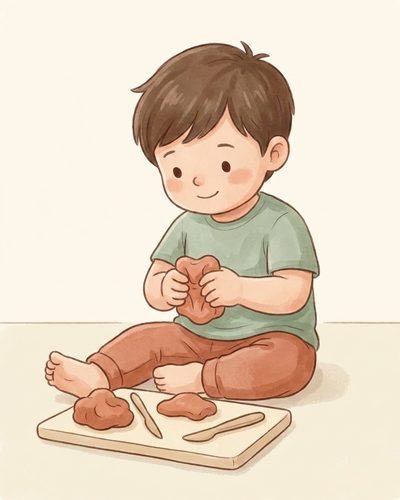
“Printable worksheets save money.”
Reality
Run the math. Per-use cost of printables: roughly five cents each across a hundred sheets, plus ink, plus time. Per-use cost of reusable cards: pennies, across more than a thousand uses. Reusable is cheaper before it’s greener.
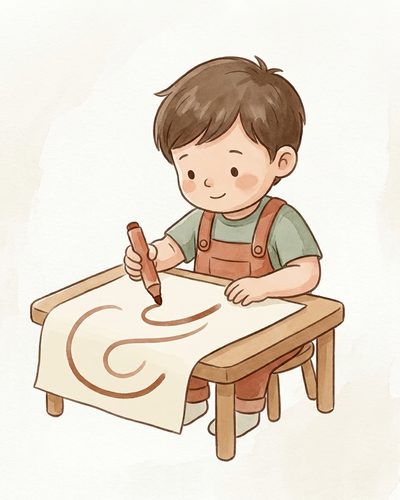
“Any pencil works.”
Reality
Tool sizing matters at each stage. Chunky tools fit early grips; skinnier tools naturally invite a tripod hold later. Using the wrong tool forces the hand to compensate with tension.
Schneck & Henderson, 1990
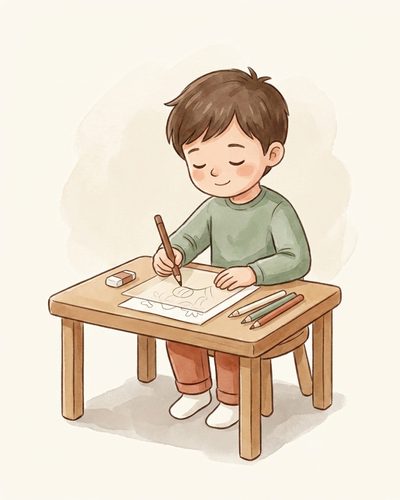
“Practice doesn’t matter much.”
Reality
Pencil control is purely muscle memory. There is no shortcut — only repetitions. The fastest path is also the slowest one: short daily sessions, every day.
Ready to put this into practice?
Four grip stages, one reusable system — and a 49-page guide that tells you which card to use when.


Common Questions
Activities that build the hand muscles and motor patterns a child needs to control a pencil. Tracing wide lines, drawing inside shapes, following dotted paths — all designed to come before letter formation.
Most children are ready for simple stroke practice between ages 3 and 4. Hand-strength play can start earlier. Letter shapes come later, after grip refines toward static or dynamic tripod.
Pencil control comes first — it’s the strokes and grip that letters are built from. Handwriting practice begins once those strokes feel automatic enough to combine into letters.
Yes, on every dimension that matters: repetitions per dollar, waste, durability, and continuity. One printable supports one session; one reusable card supports hundreds.
Five to ten minutes for ages 3-4; ten to fifteen for ages 4-5. Daily is the key. Quality of attention matters more than total minutes.
Often it’s tool mismatch or weak hand muscles. Try a thicker barrel or grip aid; add hand-strength play. Don’t correct the grip directly — that usually tightens it further.
The developmental stages are identical. Practical tweaks: angle the paper so the writing edge tilts right, and avoid hooking the wrist. A left-handed pencil grip works the same way as a right-handed one — mirrored.
Refined dynamic tripod grip usually appears between ages 5 and 6, with refinement continuing through age 7. Wide individual variation is normal — what matters is forward motion, not arrival time.