

Kindergarten Handwriting Practice: A Developmental Approach Beyond Worksheets
What the research actually shows about how handwriting becomes a neuromuscular sequence — why letter mastery takes weeks not days, and the reusable approach that outlasts hundreds of printable worksheets.
“Handwriting is not a worksheet skill. It’s a neuromuscular sequence — and printable PDFs are the slowest, least durable way to teach it.”

Foundation strokes become letters become words — over 14 weeks of daily practice.

14 weeks
Average time to letter mastery with daily 15-minute practice
Developmental writing norms

Distinct circuits
Handwriting activates neural regions typing does not
James & Engelhardt, 2012

6×
Stronger letter recall when letters are hand-drawn rather than typed
James & Engelhardt, 2012
The 4 Stages of Handwriting Development

Stage 1
Pre-letters: Lines & curves
Vertical lines, horizontal lines, circles, and curves are the motor building blocks for every letter that follows. Without these, letter formation feels forced rather than fluent.

Stage 2
Capital letters
Capitals appear before lowercase for a reason — most are built from straight lines and a few simple curves, which are easier to plan and execute.

Stage 3
Lowercase emergence
Lowercase letters require finer motor control: tighter circles, more direction changes, smaller stops and starts. They emerge once capitals feel automatic.

Stage 4
Word formation
Combining known letters into three-letter words is the first reading-writing bridge — writing starts to feel like communication, not practice.
The 3-Step Framework Teachers Use

Foundation strokes
Before letters, the hand needs to master the four strokes that letters are built from: vertical lines, horizontal lines, circles, and curves. Five minutes a day on these — long before introducing letters — builds the motor library every letter will draw from.

Letter families
Group letters by the strokes they share. The l / i / t / L family teaches one stroke pattern that unlocks five letters. Curves cluster together (c, o, a, d). Diagonals cluster (k, v, w, x). Teaching one family before the next builds momentum.

Word combinations
Once 6-8 letters feel automatic, combine them into short words. Three-letter words like “cat,” “mom,” or a child’s own name turn writing into communication. This is when many kindergartners discover that letters mean something.
Built For This
The Reusable Tool That Outlasts Kindergarten
The problem with kindergarten handwriting practice isn’t the practice — it’s the format. A child needs hundreds of repetitions to refine letter formation, and printable worksheets are designed to be used once and recycled.
The Trace Lab is a set of dry-erase trace cards paired with a 49-page progression guide. The cards cover foundation strokes, capital letters, lowercase letters, and word combinations. The guide gives parents day-by-day session plans for the full 14-week sequence.
Every variant ships with: 26 dry-erase letter cards, foundation stroke cards, a dry-erase marker, a wipeable storage pouch, and the free Trace Lab Guide ($49 value) with 4-week progressive plans for each developmental stage.

The Trace Lab
Reusable handwriting practice system — strokes to words
30-day satisfaction
Three Myths Kindergarten Parents Hear
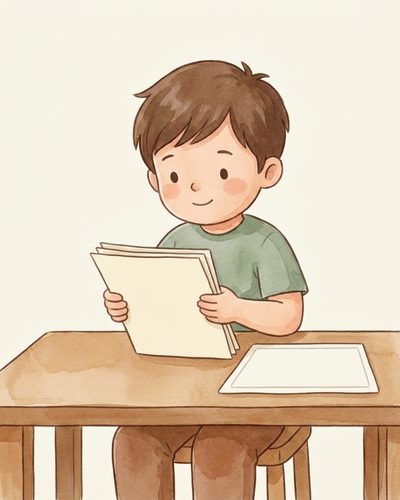
“My kindergartner should be writing neatly by now.”
Reality
Most 5-year-olds produce letters that are legible but inconsistent — the same word can look different on the third try than the first. Refinement is gradual, continuing through ages 6 and 7.
Berninger, 2009
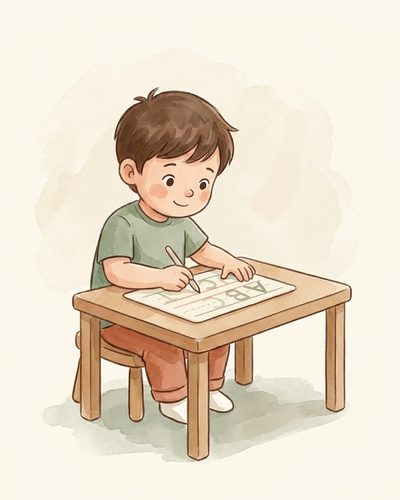
“Printable worksheets are the standard way to practice handwriting.”
Reality
Worksheets are consumable. A child needs hundreds of repetitions to refine each letter, and a stack of printed PDFs hits the recycling bin long before that. Reusable cards do the same work with no waste.
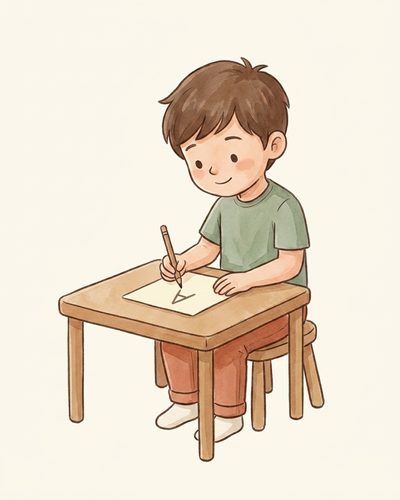
“Tracing letters teaches writing.”
Reality
Tracing builds visual familiarity with letter shapes. Freehand writing builds motor planning — the harder skill. Children need both, but tracing alone never produces fluent writers.
James & Engelhardt, 2012
Ready to put this into practice?
Four developmental stages, one reusable system — and a 49-page guide that maps daily practice from foundation strokes to word formation.


Common Questions
Most children are ready for formal handwriting practice between ages 4.5 and 5.5, when the dynamic tripod grip emerges. Before that, the hand isn’t physically ready to control a pencil with the precision letter formation requires. If your child still holds a pencil with a fist or all four fingers, focus on grip-building activities first.
For kindergartners, 10-15 minutes daily is the sweet spot. Quality matters more than duration — five focused minutes outperform thirty minutes of forced practice. End sessions before frustration sets in, even on good days.
Letter reversals are completely normal until around age 6-7. They reflect spatial reasoning that’s still under construction, not a learning issue. Gently model the correct orientation during writing time, but don’t repeatedly correct — that creates anxiety around an already challenging skill.
Print first, always. Cursive is a separate skill set typically introduced in second or third grade, after print letters feel automatic. Kindergarten is the foundation; cursive can wait.
Tight grip is usually a sign of either grip-stage immaturity or anxiety around accuracy. Try a thicker pencil or grip aid first — sometimes the tool is too small for the hand. If grip remains tight after a few weeks of tool changes, ease back to grip-building activities (playdough, tongs, finger games) before pushing more handwriting.
Yes — and often it’s the best place to start. A child’s name is the most motivating word they know. Once four to six of the letters in their name feel automatic, name writing becomes the gateway to all other writing. Many kindergartners discover what writing is for through their own name.
No. Correction in handwriting practice has diminishing returns and can quickly create avoidance. Model the correct form by sitting beside your child and writing your own letter slowly. Then offer one piece of feedback at most per session — usually about formation direction, not appearance.
Reusable cards win on both repetition and cost. A printable worksheet supports one practice session; a reusable card supports hundreds. Per-use cost makes the math obvious — and your child can revisit the same letter on the day they need it most without printing more pages.