
The ROOTPLAY System
Most toys are forgotten in 30 days. Ours come with a plan.
Every ROOTPLAY tool is paired with a research-backed developmental guide — a structured protocol with weekly session scripts, milestone checkpoints, and cited science. Five tools. Five guides. One system that grows with your child from 6 months to 8 years.

New neural connections formed per second in the first 3 years
Harvard Center on the Developing Child
Of unused neural pathways are pruned away — connections that aren't exercised are lost
Huttenlocher, 2002
Peer-reviewed studies cited across our developmental guides
JAMA Pediatrics, PNAS, Harvard
A $500 toy graveyard — and the screen-time trap.
Most toys get five minutes of attention before joining the pile. Most parents reach for the iPad because nothing else holds focus. Both problems share the same root cause.
Toys arrive with no protocol. Screens arrive with no purpose. So the wooden puzzle ends up forgotten in a basket and the tablet ends up running on autopilot — because there was never a plan to begin with.
ROOTPLAY is the alternative to both. A developmental tool paired with a research-backed guide that turns 15 minutes a day into real cognitive architecture. No subscriptions. No screens. No graveyard.
The toy is the seed. The guide is the soil.
Three components · One purpose
The Tool
A physical, durable, age-appropriate developmental object. No screens, no flashing distractions. Built to be held, manipulated, and revisited.
The Guide
A research-backed developmental protocol with weekly session scripts, milestone checkpoints, and cited peer-reviewed science. Delivered to your inbox after purchase.
The Result
15 minutes of purposeful play building real neural pathways — attention, language, fine motor, executive function. Not a toy your child plays with. A skill they grow into.
The Sensory Starter


Synaptic pruning eliminates up to 40% of unused connections in some brain regions. Pathways activated by sensory experience become permanent. Pathways that receive no input are dismantled.
Huttenlocher & Dabholkar, 1997; Harvard Center on the Developing Child
The Sensory Starter — built for the 1-million-connections-per-second window
In the first two years, your baby's brain forms over a million new neural connections every second. The pathways that get used become permanent. The pathways that don't get pruned away. This compact six-faced cube feeds six different sensory channels — visual, auditory, tactile, proprioceptive, fine motor, and cause-and-effect — during the most explosive period of brain growth your child will ever have.
- 6 faces, 6 neural pathways — spinning propeller, push switch, mirror, wire bead, music dial, regulator
- Palm-sized 90mm cube — fits in any diaper bag, BPA-free, safe for mouthing from 6 months
- Grows with your baby — palmar grasp at 6mo, pincer at 12mo, naming at 18mo
- Includes a free month-by-month guide — Explorer → Experimenter → Repeater → Namer phases
The Calm Play Kit

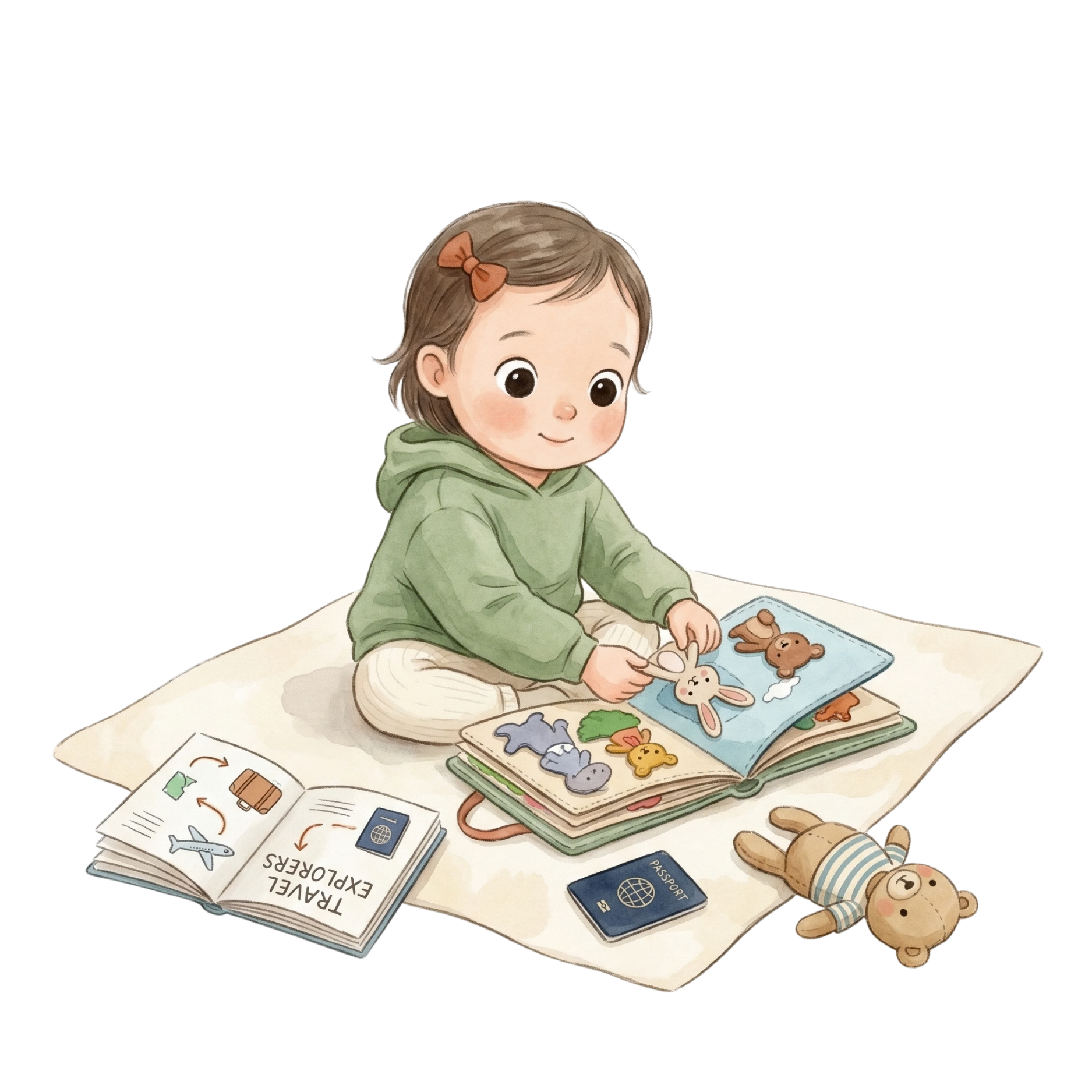
Toddlers given 4 toys instead of 16 played significantly longer, with greater depth and more creative variation. Less is more — when each item has a clear purpose.
Dauch et al., 2018 — Infant Behavior & Development
The Calm Play Kit — the screen-free travel solution that actually works
Restaurants. Flights. Waiting rooms. The moments where every parent reaches for the iPad — not because they want to, but because nothing else works. The Calm Play Kit is a 140-gram velcro felt book designed for exactly those moments. The peel-and-stick mechanism is rhythmic and self-soothing, builds the pincer grasp your child will need for handwriting, and grows vocabulary through three themed pages.
- 30 to 60 minutes of silent engagement — modular travel protocol blocks tested in restaurants and flights
- Velcro builds the pincer grasp — the same motor pattern your child will use for handwriting
- 140g, biteable, washable — lighter than your phone, safe from birth, fits any diaper bag
- Includes a free travel protocol guide — Point-Label-Repeat vocabulary system + 30/45/60-min blocks
The Number Lab

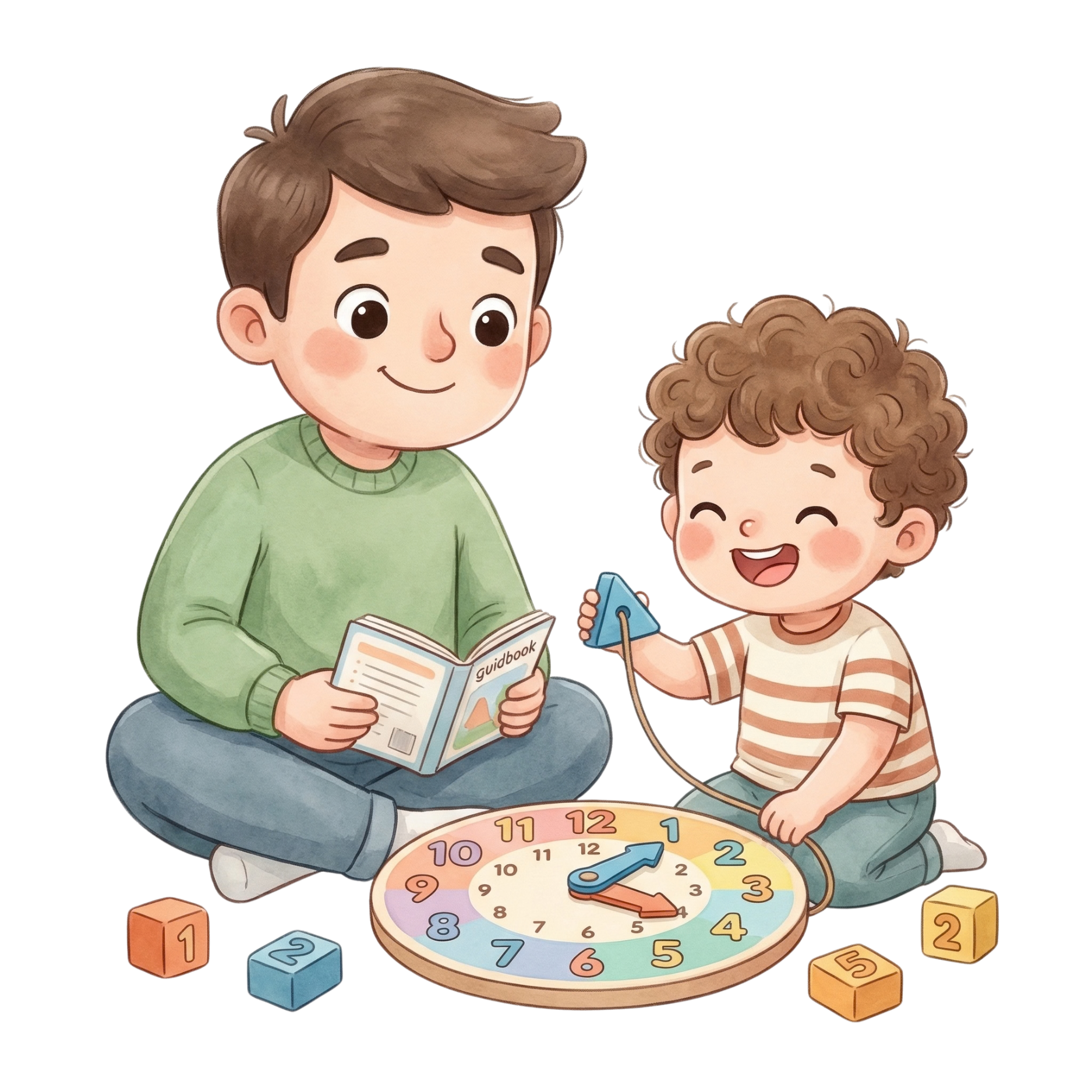
When children rotate a wooden block to find the correct orientation, they perform mental rotation — a core spatial skill that strongly predicts later mathematical achievement. A screen eliminates depth, mass, and friction.
Lakoff & Núñez, 2000; Jirout & Newcombe, 2015
The Number Lab — five brain regions, one wooden puzzle
Most toys activate one skill. A coloring book builds fine motor. A counting app builds number recognition. A shape sorter builds spatial reasoning. Each is useful, but isolated. The Number Lab does something different: every fifteen-minute play session simultaneously activates mathematical thinking, spatial reasoning, temporal concepts, fine motor control, and color discrimination — all through twelve numbered shape blocks on a wooden clock face.
- 5 brain regions, 1 tool — math, spatial, temporal, fine motor, and color in a single session
- Natural wood, water-based paint — BPA-free, smooth edges, no batteries or screens
- Grows with your child — shape matching at 2, number recognition at 3, clock foundations at 5
- Includes a free 8-week progressive guide — Shapes → Numbers → Threading → Clock Play
The Focus Builder

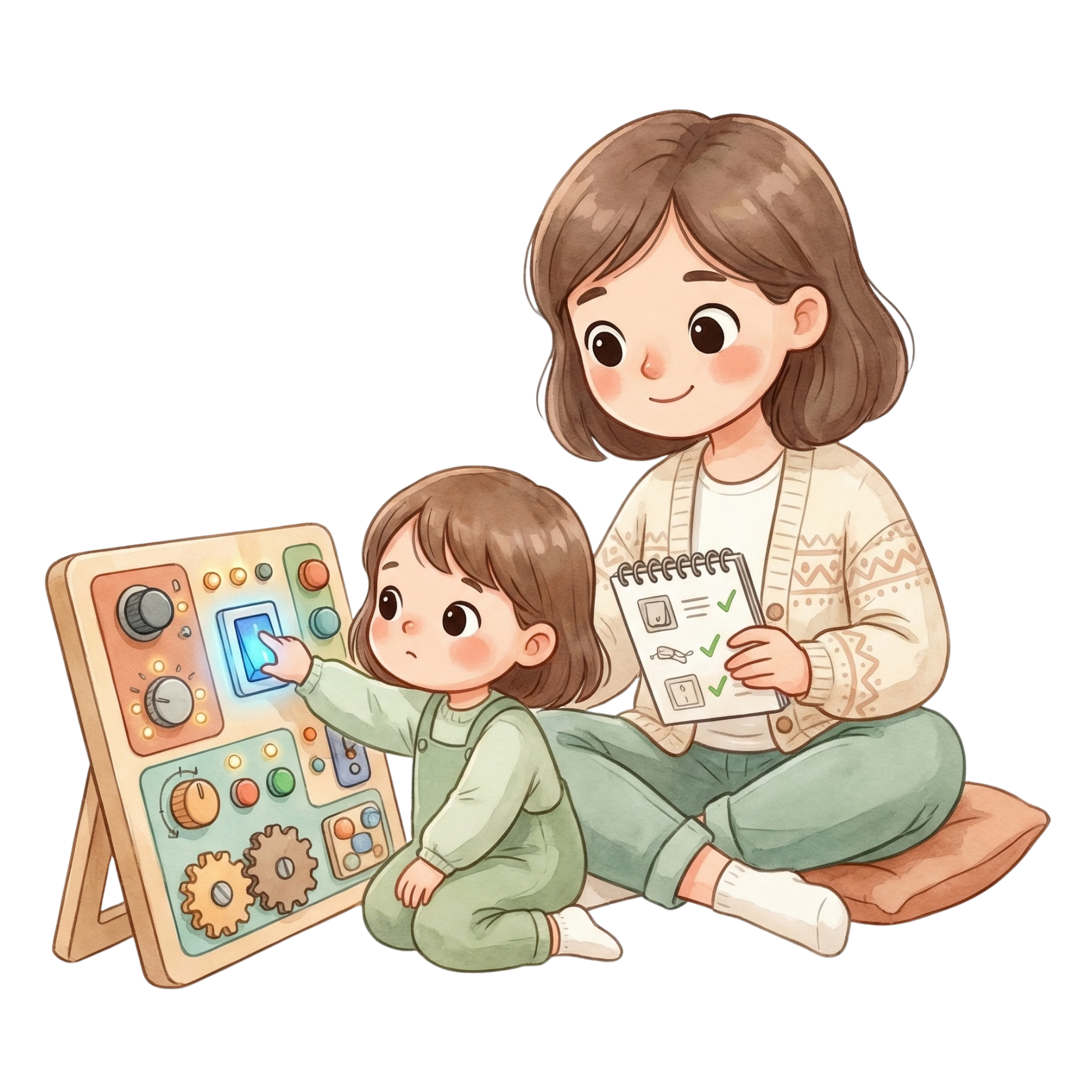
Childhood self-control predicted adult health, wealth, and well-being over three decades — more strongly than IQ or socioeconomic status. Guided play meta-analysis showed an effect size of g = 0.93 for attention.
Moffitt et al., 2011 — PNAS; Weisberg et al., 2016
The Focus Builder — the skill that predicts success more than IQ
A landmark study followed over a thousand children for thirty years. The finding changed how researchers understand childhood development: self-control at age 5 predicted adult health, wealth, and well-being more strongly than IQ or socioeconomic status. Executive function is trainable. The Focus Builder is the first busy board paired with a 4-week protocol designed to train it — through eight different switch types and twelve LED lights that create closed-loop, screen-free learning.
- 8 switch types, 12 LED lights — toggle, joystick, key lock, push button, compass, and more
- Closed-loop cause-and-effect learning — every action produces immediate visual feedback your child can predict
- Travel-friendly, 226mm — fits in any bag, no WiFi, no apps, no ads
- Includes a free 4-week protocol — Explore → Name → Sequence → Rules, with daily session scripts
The Trace Lab

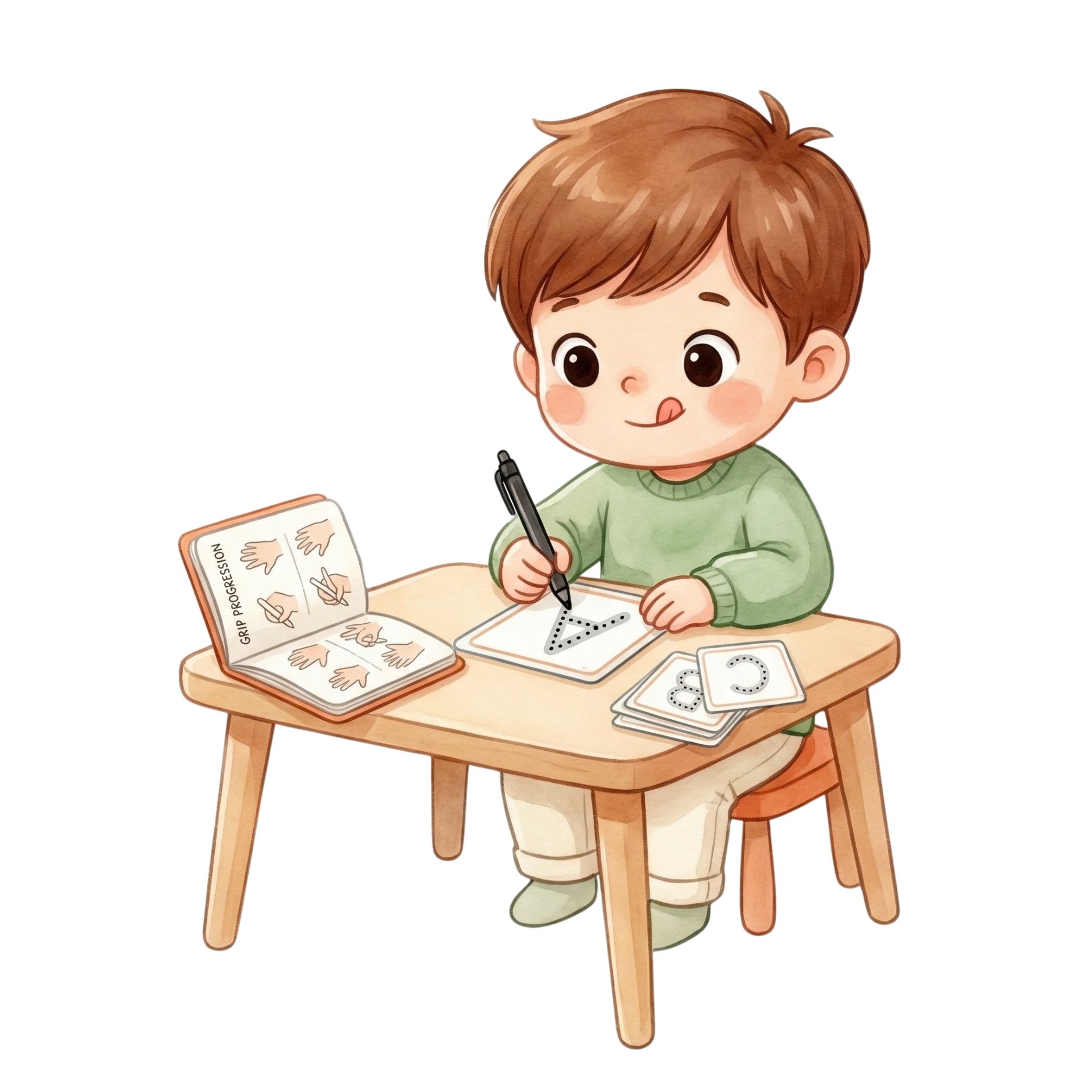
Children who wrote letters by hand showed adult-like neural activation in reading areas. Children who traced or typed the same letters did not. Pre-K writing skills predicted 2nd grade achievement more strongly than any demographic variable.
James & Engelhardt, 2012; Dinehart & Manfra, 2013
The Trace Lab — handwriting activates brain regions that typing cannot
A 2012 study scanned the brains of preschool children writing letters by hand versus tracing or typing the same letters on a screen. Only the hand-writing group showed adult-like neural activation in the brain regions responsible for reading. Typing produced none. The Trace Lab is a wipe-clean reusable workbook in four progressive themes — built so your child can practice the same letter hundreds of times without ever fearing a mistake.
- Erasable, reusable, unlimited practice — mistakes wipe clean, confidence builds, no paper waste
- 4 progressive themes, 36 cards each — Basic Lines → Numbers & Letters → Whole Brain → Connect the Dots
- Erasable pen included — laminated cardstock, CE certified, built for years of daily use
- Includes a free 6-week pre-writing protocol — Grip Revolution stages from fist to dynamic tripod
Common questions about the system
Where should I start if my child is between ages?
Do I need all five tools to make the system work?
How long does each guide take to read?
What if my child doesn't engage with a tool?
How is this different from a Lovevery subscription?
Are your tools officially Montessori certified?
Start tonight
Pick the system your child needs first.
Five tools. Five research-backed guides. One promise: 15 minutes a day building real cognitive architecture — not screen time, not entertainment, not a toy graveyard.
Choose Your Toy